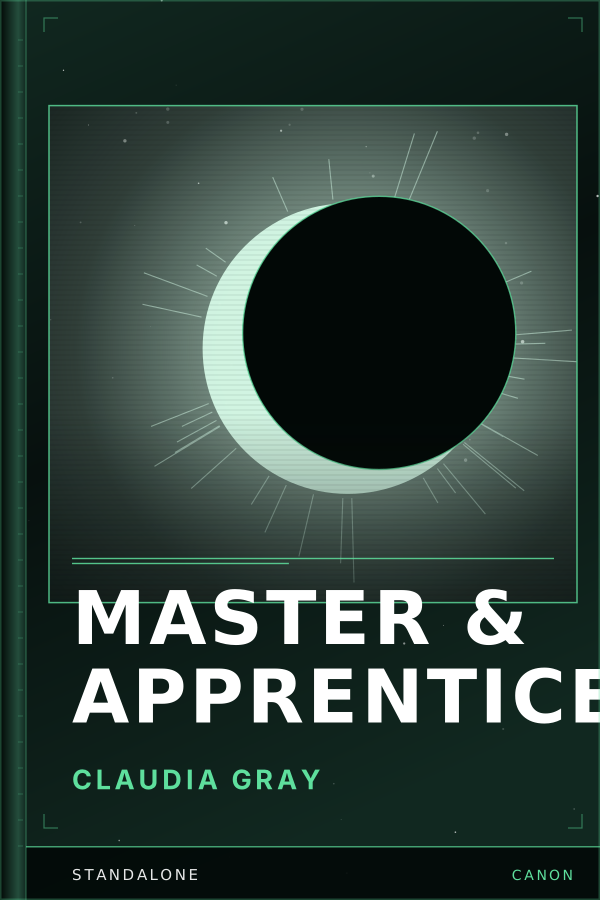
There is a version of this book that would have been perfectly fine and completely forgettable: two Jedi, one mission, some lightsaber work, a tidy resolution. Claudia Gray did not write that book. Master & Apprentice is a novel about whether an institution can be right about everything in principle and wrong about almost everything in practice, and it happens to have Jedi in it.
The setup
It is roughly eight years before The Phantom Menace. Qui-Gon Jinn has been offered a seat on the Jedi Council — an offer that would mean giving up his Padawan. Obi-Wan Kenobi is seventeen, rule-bound, faintly disapproving, and convinced his master finds him disappointing. They are sent to Pijal, a world on the edge of a treaty that will make a great many people at the Republic's centre a great deal of money.
What follows is a mystery plot, but the mystery is not really the point. The point is that Qui-Gon keeps having visions, the Council keeps telling him prophecy is not a reliable instrument, and both positions are defensible. Gray refuses to make either side stupid.
What it gets right
Three things, in ascending order of importance.
- The apprenticeship. The films present Qui-Gon and Obi-Wan as a settled unit. Here they are two people who do not know how to talk to each other, and watching them learn is the emotional engine of the whole book.
- Rael Averross. A former Padawan of Dooku, now a Jedi who has spent too long alone on a single world and stopped being able to tell attachment from duty. He is the argument the Order makes against itself.
- The economics. Gray puts a slavery-adjacent labour system at the centre of the plot and does not let the Jedi off the hook for finding it inconvenient rather than intolerable. This is the material that The Phantom Menace gestures at with Anakin's backstory and then drops.
Where it strains
The final act tips into conventional action a little more readily than the first two thirds earn. And the villain's mechanics, once revealed, are more functional than interesting. Neither is fatal; both are the price of writing a genuinely thoughtful novel inside a franchise that expects a set piece.
Who should read it
Anyone who has been told the prequel era is the weak shelf. Anyone who liked the idea of the Jedi as flawed and wanted a book that took the flaw seriously. And anyone starting from zero — this is the most welcoming door on the whole shelf, because it assumes nothing and explains itself as it goes. Pair it with The Living Force, reviewed here, for the same Council seen five years later.