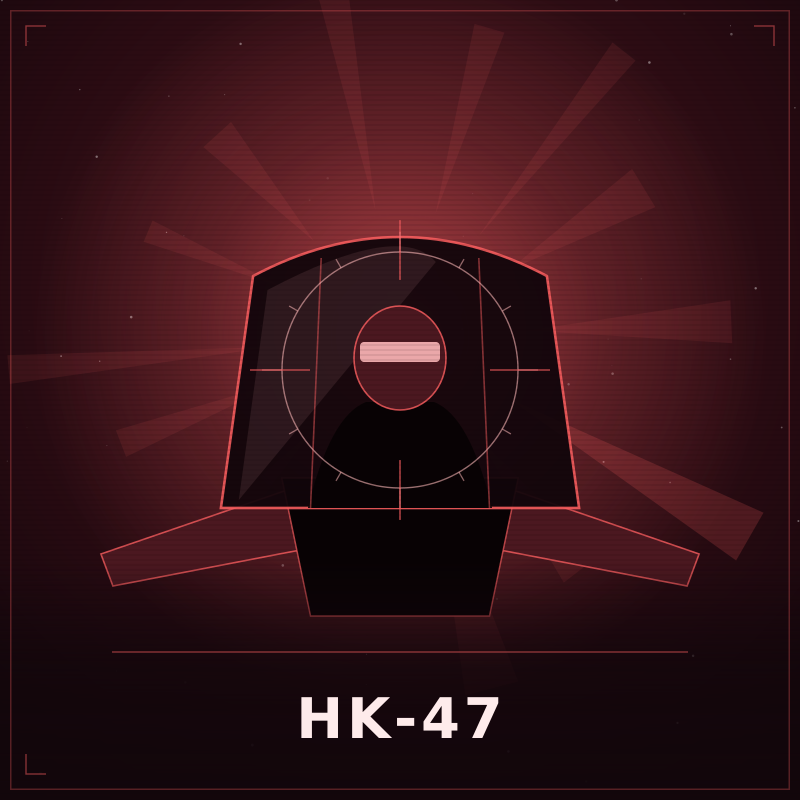
HK-47 is an HK-series assassin droid built by Revan during and after the Mandalorian Wars, and one of the recruitable companions in BioWare's Star Wars: Knights of the Old Republic (LucasArts, 2003). He was written by David Gaider and voiced by Kristoffer Tabori.
The joke and the structure of the joke
HK-47 speaks in labelled statements — "Statement:", "Observation:", "Query:" — as though annotating his own dialogue tree. It reads as a droid's protocol quirk and lands as comic timing, because the label always undercuts the content. Two decades of imitators have not improved on it.
Why he is more than a gag
The player buys him from a junk dealer on Tatooine as a curiosity, and gradually discovers that the droid's memory has been wiped, that his original master was Revan, and that the player character is Revan. HK-47's affection for his master is the game's tenderest running thread and also its most disturbing, because the affection is for a person who used him to murder people.
"Meatbag"
His contempt for organic life is the character's signature. It is worth noting how carefully it is written: HK-47 does not hate organics in the abstract. He finds them inefficient, fragile and prone to negotiation, all of which are, from an assassin droid's point of view, design flaws.
The sequels and the line
He returns in Knights of the Old Republic II: The Sith Lords (Obsidian, 2004), where the running plot concerns the HK-50 units built to replace him, and again in Star Wars: The Old Republic (BioWare, 2011). Dark Horse's Knights of the Old Republic comic run works the same era.
Continuity
Legends. The Knights of the Old Republic games were moved out of canon by the 2014 reset. HK-series droids have since been referenced in canon material, but HK-47 as written — the memories, the master, the wipe — belongs to the old continuity.
The reputation
He is routinely named in "best video-game companion" lists two decades after release, which for a supporting character in a 2003 role-playing game is a genuinely unusual afterlife. The character was influential enough that the labelled-dialogue tic has become a recognisable style in its own right.