Leia Organa is a human female, born to Padmé Amidala and Anakin Skywalker and adopted by Bail and Breha Organa of Alderaan. She was introduced in Star Wars: Episode IV A New Hope (1977) and played by Carrie Fisher.
The novels understood her early
The films give Leia the tightest arc of the original trio and the least room for interior life. Prose fixed that. From the Bantam era onward the books have consistently framed her as what she plainly is — a working politician who learned insurgency because her government was destroyed — and that framing produces better stories than treating her as a princess who can shoot.
Canon: the Bloodline problem
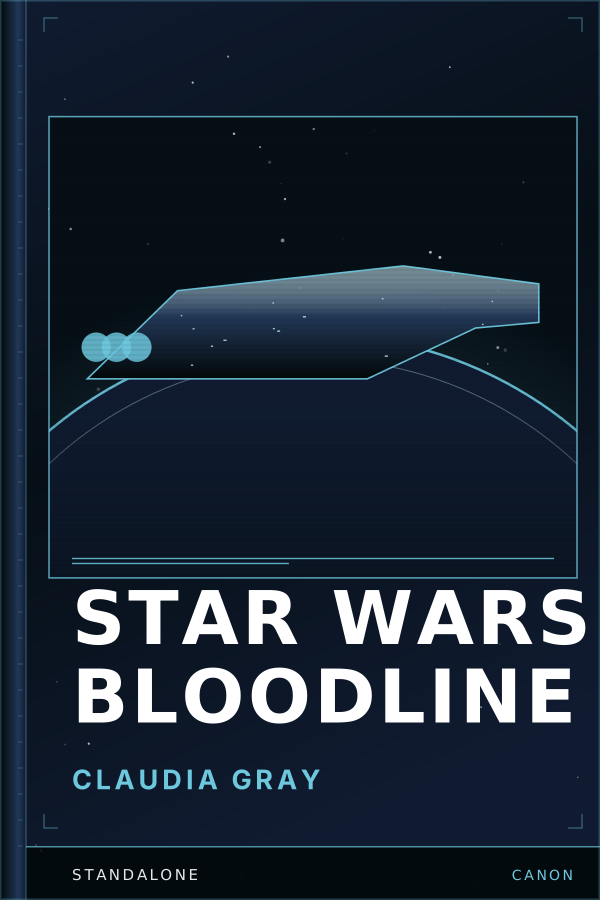
Claudia Gray's Bloodline (Del Rey, 2016) is the essential Leia novel in current canon. Set six years before The Force Awakens, it puts her in a New Republic Senate that has fractured into factions and is bored of the war she won, and it detonates the fact of her parentage in public. It is the book that explains, more than any film does, why the Republic in the sequel trilogy is so useless.
Legends: a different life
In Star Wars Legends she becomes Chief of State of the New Republic, trains as a Jedi late and reluctantly, and raises three children — Jacen, Jaina and Anakin Solo — through a war that kills one of them and, eventually, turns another. Those events do not happen in current canon. If you read across both shelves, expect two women with the same voice and completely different biographies.
Where to start
Canon: Bloodline, then Leia, Princess of Alderaan for the teenage political education. Legends: the Thrawn trilogy, where she is doing diplomacy on Honoghr while heavily pregnant and it is the best material in the book.