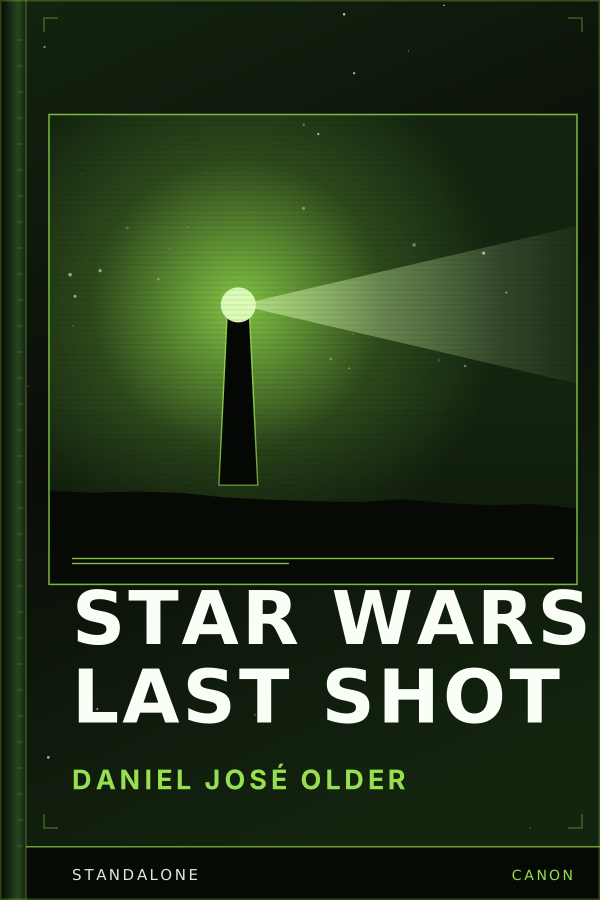
Han Solo is a human male from Corellia, introduced in Star Wars: Episode IV A New Hope (1977) and played by Harrison Ford. Solo: A Star Wars Story (2018) gave him an on-screen origin — a childhood in the Corellian shipyards, an escape, the Empire, Chewbacca, the Kessel Run — and Alden Ehrenreich in the role.
The prose problem
Han is the hardest of the three leads to put on the page, because so much of him is timing. Ford's delivery does work that description cannot. The novels that succeed with him mostly do it by giving him something to be competent about — a ship, a run, a debt — rather than by trying to transcribe the charm.
Legends: the Corellian trilogy and beyond
Star Wars Legends built Han an enormous back catalogue: A. C. Crispin's Han Solo trilogy in the 1990s reconstructed his youth, Corellia and the Imperial Academy included, and Brian Daley had already given him a private-eye trilogy of his own in Han Solo at Stars’ End (1979), and the Bantam and Del Rey books then followed him through marriage to Leia, three children, and a middle age that is genuinely bruising. The Legends Han grows old in a way the films never asked him to.
Canon
Current canon keeps the marriage, drops the family down to one son, and lets the sequel trilogy end him. The tie-in novels around Solo — Last Shot among them — and Marvel's ongoing comics — mostly fill in the smuggling years, which is where he is most comfortable and, frankly, most fun.
The reading note
Watch for how differently the two continuities treat his relationship with responsibility. Legends promotes him and makes him a general and a father who mostly copes, right through to the Legacy era. Canon keeps returning him to the freighter. Neither is wrong; they are different arguments about whether people change.